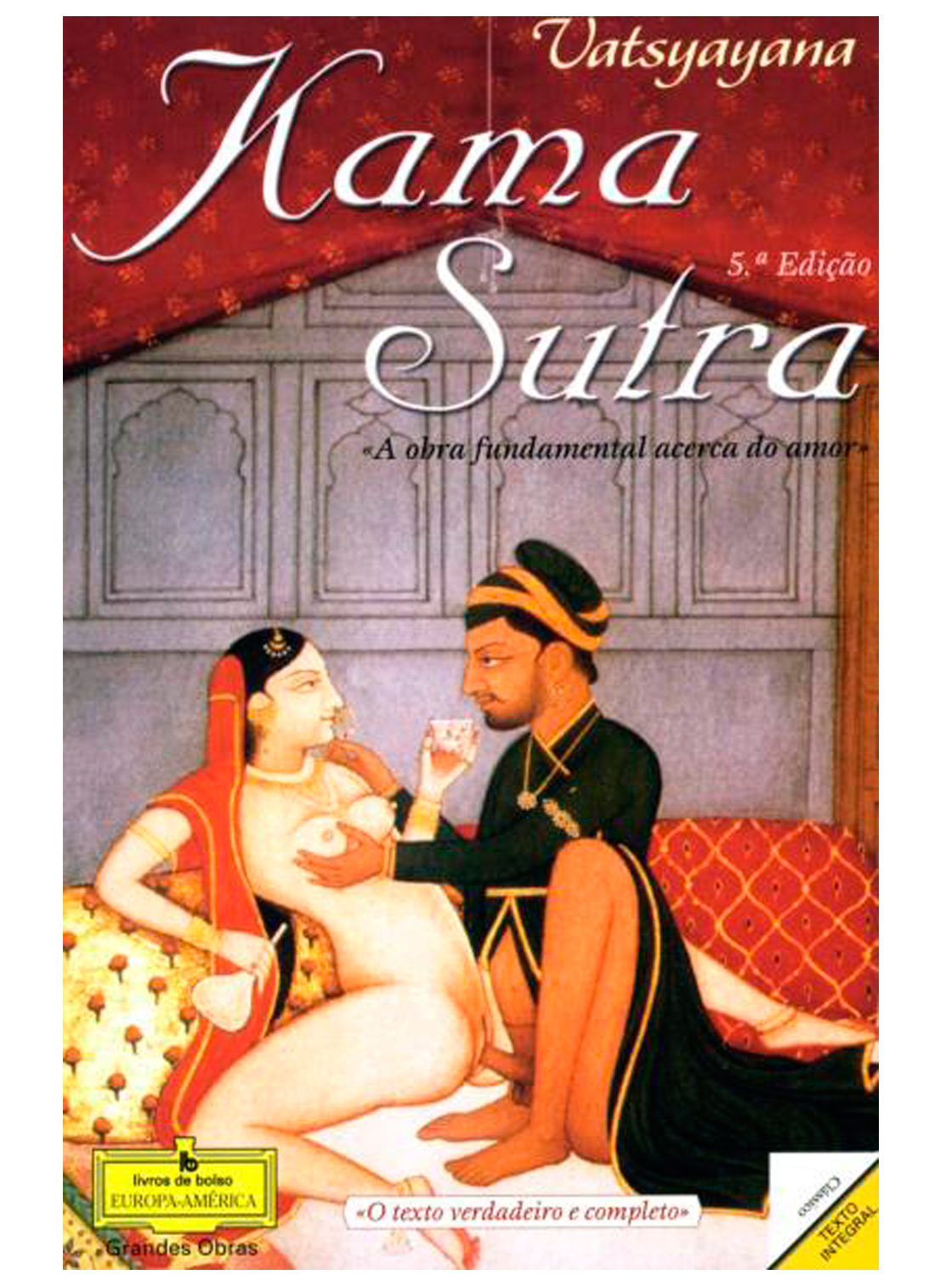
The Kama Sutra was written for the benefit of the world, according to the precepts of Sacred Scripture, by Vatsyayana, when he was wholly devoted to the contemplation of divinity. This statement will only seem strange to those unfamiliar with the markedly erotic nature of the Song of Songs, a book which, nevertheless, the Jews did not hesitate to include among those that make up the Bible. In the milieu in which the Kama Sutra was written, it was always surrounded by an almost religious veneration, and its author referred to as the Great Prophet.
We are, however, in the presence of one of the great classics of erotic literature, which is to Hindu culture what The Art of Love, by Ovid (no. 84 in this collection), is to the West and The Perfumed Garden (no. 129 in this collection) is to Arab culture.
Composed between the 1st and 4th centuries AD, the Kama Sutra only became known in the West in the last century, thanks to the translation made by the Englishmen Sir Richard Burton and Forster Arbuthnot.
While it is true that many of its readers seek above all the erotic elements in the book, those wishing to go beyond the superficial aspects will find here a profoundly enlightening document of a conception of life very different from the one to which we are accustomed. And that is by no means the work's least merit.
Author: Vatsyayana
Publisher: Publicações Europa-América
Language: Portuguese
Number of pages: 220
Delivery within 48 hours, workdays, if you order before 4:00 p.m. Mainland Portugal and Spain for items in stock. Free dellivery depends on shipping country. Possible delays during holiday periods.

 KAMA SUTRA Manual